
Faculty Learning That Works | 035 | Faculty Need Faculty
Building the conditions for educators to keep learning and improve their craft.

What conditions actually help faculty learn in ways that improve student success? I was a guest on the Education Insight podcast to unpack this question. Below, I’ve pulled out the key themes from our conversation and added practical action steps to help you think about how to design a culture of continuous improvement on your campus.
Also available on Apple, Spotify, and Amazon Music

Theme 1: Faculty Need Faculty (Learning Is Social)
Core insight
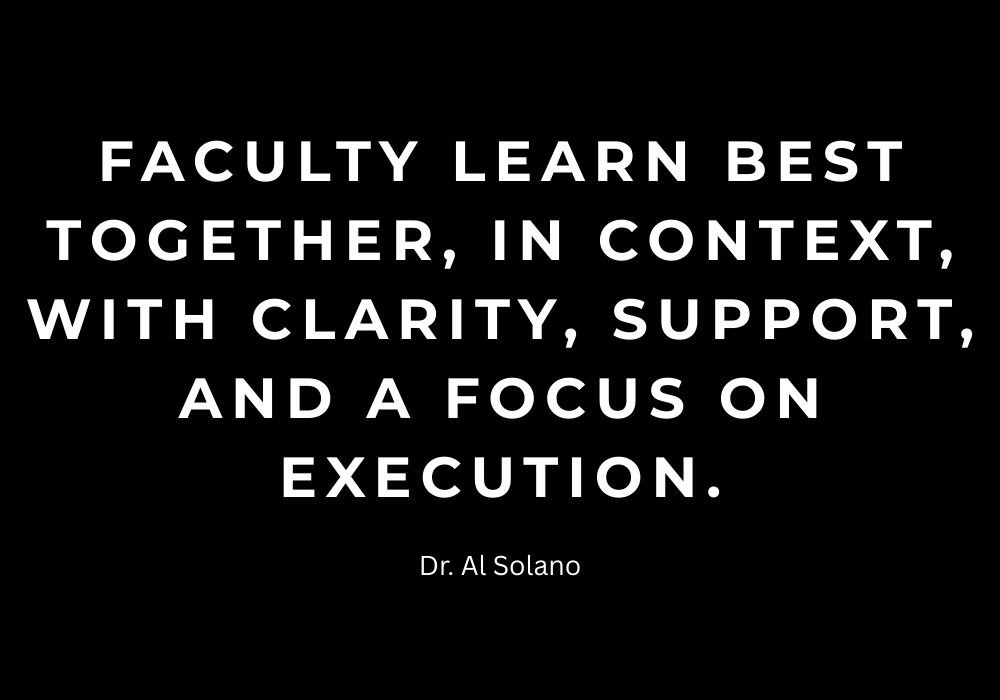
Educators improve fastest when they learn with one another, not in isolation. Expecting continuous improvement without structured collaboration is unrealistic.
Actionable steps
Create job-alike workgrous (same discipline or closely related areas).
Protect at least 3 hours per month for collaborative instructional work.
Design meetings around doing the work (student artifacts, assignments, assessments); not updates.
Train one facilitator per group to keep conversations focused and productive.
Theme 2: Professional Development Must Live Where the Work Happens
Core insight
One-off workshops inspire but rarely change practice. Growth sticks when support and collaboration is embedded into the work
Actionable steps
Shift from “PD events” only to ongoing inquiry cycles (Plan → Test → Reflect → Adjust).
Replace generic sessions with site-based, discipline-specific learning.
Build follow-up into every PD effort: coaching check-ins, shared reflections, and revisions.
Measure learning by implementation, not attendance.
Theme 3: Clarity Beats Overload
Core insight
Burnout isn’t caused by lack of effort, it’s caused by too many priorities and no structure for execution.
Actionable steps
Ask teams to identify one instructional challenge per term.
Explicitly name what won’t be worked on this cycle.
Normalize small wins and incremental progress.
Theme 4: Technology Is a Tool; Pedagogy Is the Driver
Core insight
“Keeping up” with A.I. doesn’t mean chasing every tool. It means using technology to strengthen learning, not replace teaching.
Actionable steps
Start with a pedagogical question (e.g., feedback, engagement, scaffolding).
Pilot one low-risk A.I. use (draft feedback, brainstorming prompts).
Debrief: What helped students? What didn’t?
Share findings across teams.
Theme 5: Equity Improves Through Inquiry & Action, Not Blame
Core insight
Equity gaps close when educators are supported to ask better questions and redesign practice together.
Actionable steps
Use disaggregated data to ask: For whom is this working? For whom is it not?
Analyze assignments and rubrics for hidden barriers.
Test culturally affirming or scaffolded changes in small implementations.
Reflect collectively on outcomes, then iterate.
Theme 6: Execution Changes Culture
Core insight
Culture doesn’t change through vision statements, beautifully designed PDFs, and PowerPoints. It changes when institutions help people do the work well, repeatedly.
Actionable steps
Schedule checkpoints focused on progress, not compliance.
Build light accountability: commitments, timelines, shared artifacts.
Treat execution as a skill that can be learned and supported.
Need help with execution from a coach with a strong record of getting results? Contact Dr. Al :-)
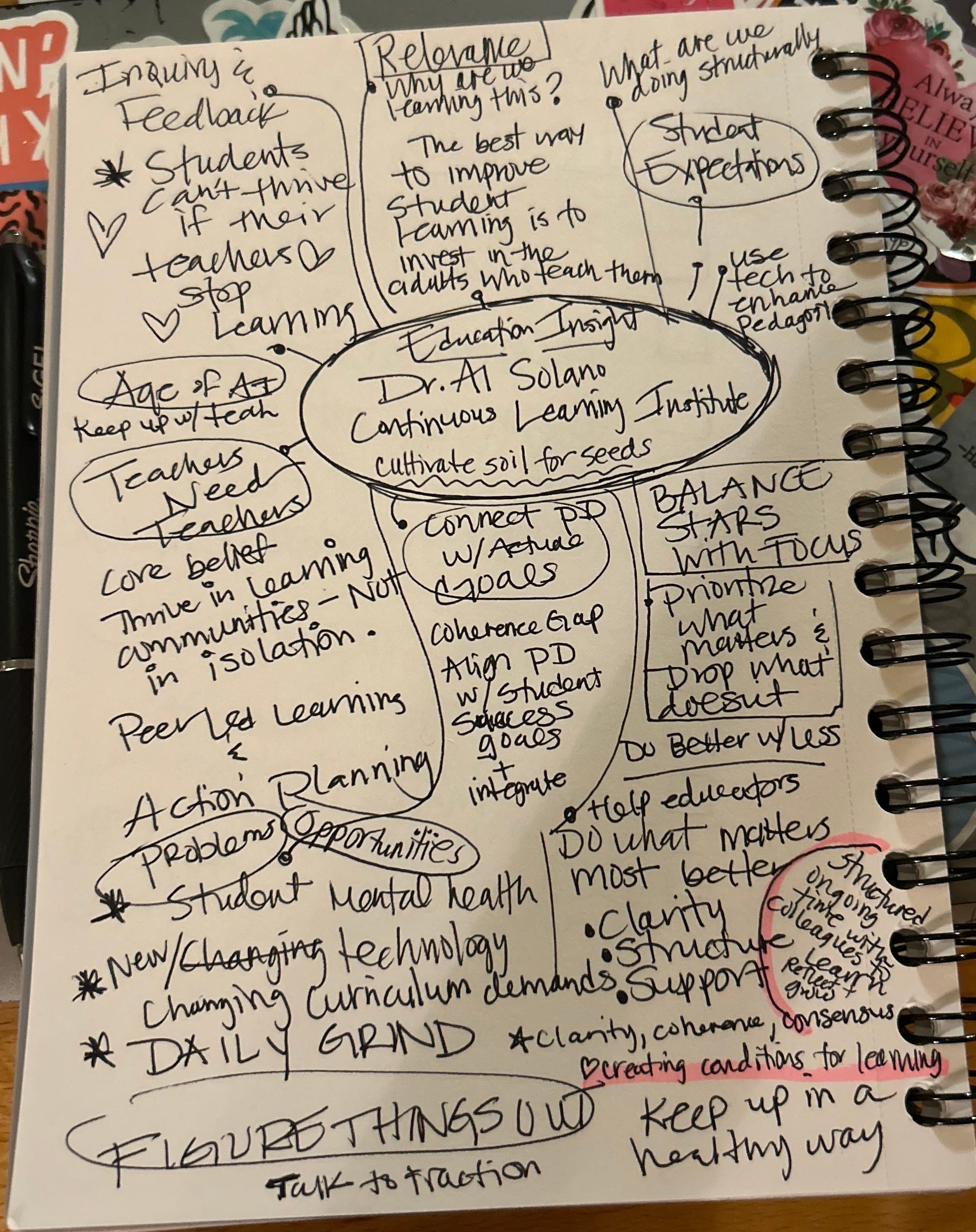
A faculty member shared her notes from my episode with the message, “Education is better because of your coaching.”
These messages and real student outcomes is why I do what I do. I’m so grateful. She gave me permission to share her meaningful notes.
A Final Reflection
If you want continuous improvement, don’t ask educators to do more.
Build systems that help them learn together, over time, with purpose.
That’s how teaching improves, equity advances, and how students benefit.
Let’s connect on LinkedIn.
Onward…
Dr. Al Solano
Founder, Continuous Learning Institute | About
Host, Student Success Podcast
A meaningful test of success is how helpful we are in contributing to our fellow human being’s happiness.