
Humanize Online Learning | 042 | Essentials
What students feel in Week 1 matters as much as what they learn in the last week.

Sometimes one sharp insight is all we need to hold on, reset, or reengage with purpose.
Practical takeaways pulled from the Student Success Podcast, so you don’t have to listen to the whole episode (unless you want to).
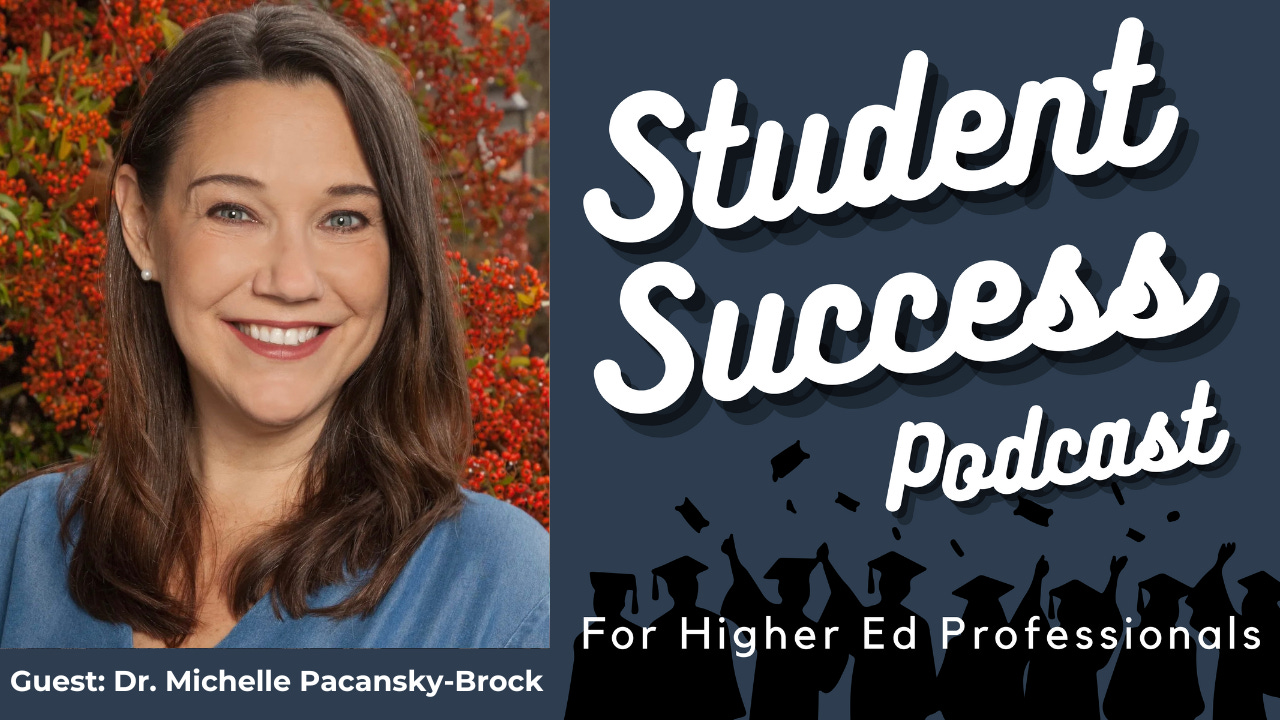
Episode with Dr. Michelle Pacansky-Brock: Show Notes | Apple | Spotify
Online learning is often framed as a modality problem only. It’s not. It’s a design and relationship issue.
As Dr. Michelle Pacansky-Brock shared, equity gaps could widen online not because students can’t learn there, but because too many courses were never designed to help students feel seen, supported, or capable in the first place.
Belonging is not a byproduct of learning. It is a prerequisite.
Key Insight #1: Humanizing Is About Mattering
Humanizing online learning is not about personality or being “nice.” It’s about sending early, consistent signals to students that:
You belong here. You can succeed here. I am here with you. Students decide whether they matter long before the first assignment is due.
Action Step:
Audit Week 0–1 of your online courses.
Ask:
How many clicks does it take before students see a human face?
What language signals support versus threat?
Where do policies overshadow partnership?
Week 0–1 is a high-impact zone. Design it intentionally.
Key Insight #2: Care and Challenge Are Not Opposites
A persistent myth, especially in STEM, is that instructors must choose between being caring or rigorous. The evidence says otherwise. The educators who most influenced us were both supportive and demanding.
Warmth does not lower standards. It raises engagement.
Action Step:
Review your syllabus and announcements for deficit-framed language:
“Most of you won’t pass…”
“This class is very hard…”
“Only students who can keep up…”
Replace warnings with scaffolds:
How students will be supported
Where flexibility exists
What success looks like in practice
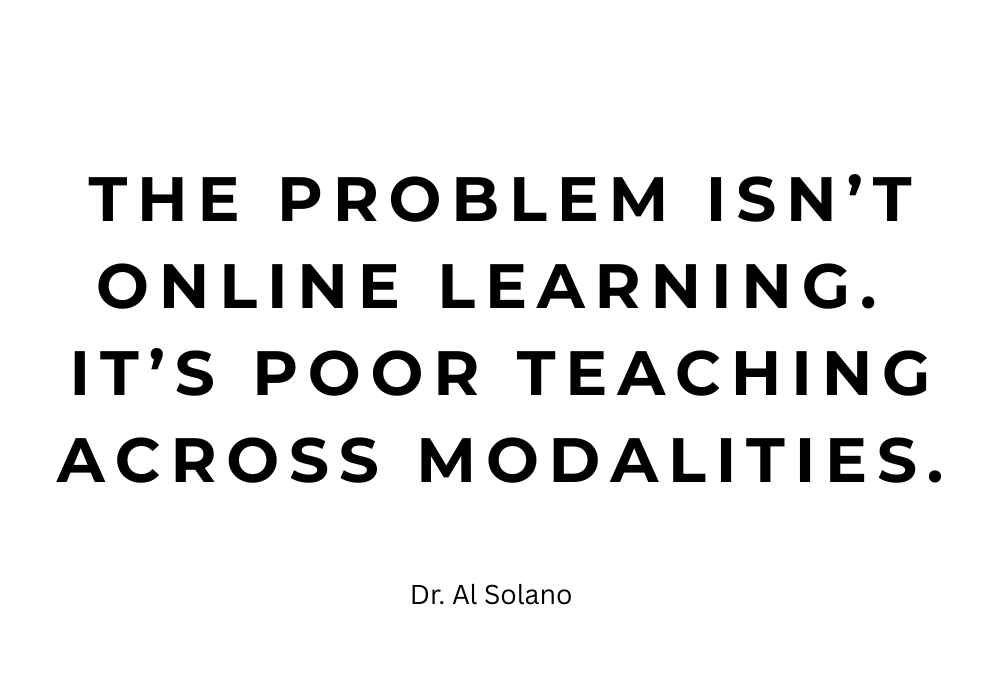
Key Insight #3: Online ≠ Inferior
Online education did not begin with the pandemic.
For many community college students who are working adults, parents, and caregivers, it has long been the only viable option.
The issue is not access or quality. It’s access and quality.
Action Step:
Stop debating modality in the abstract.
Instead, ask:
Where do equity gaps widen in online courses?
What design features contribute to that gap?
How can professional development target those features directly?
Enhance your professional development. Continuous Learner subscription upgrade available.
Key Insight #4: Professional Development Is Equity Infrastructure
If equity is a strategic priority, faculty learning cannot be episodic or symbolic.
It must be:
Intentional
Sustained
Modeled in the same modality faculty are expected to teach in
You cannot learn asynchronous teaching solely through synchronous PD.
Action Step:
Reframe professional development in your planning documents: Not as a support service, but as core equity infrastructure
Budgets reveal priorities.
Key Insight #5: Design for Psychological Safety
Students do not engage deeply when they are unsure they belong. Simple design moves: welcome videos, liquid syllabi, early outreach, mobile-friendly materials reduce isolation and cognitive load.
These are not “extras.” They are access tools.
Action Step:
Walk through your course. Note:
Barriers
Dead ends
Tone shifts
Design for the learner you actually serve.
Key Insight #6: Online Faculty Are an Untapped Asset
Across the system, there are extraordinary online educators doing transformative work who are largely unseen. Their practices rarely scale because we don’t create structures to surface and share them.
Action Step:
Create spaces to showcase:
Faculty exemplars
Student voices
Applied practices
Change accelerates when practitioners learn from practitioners.
The Bottom Line
Humanizing online learning is not a trend. It is a structural response to inequity.
When we:
Design for belonging
Invest in faculty learning
Treat online quality as mission-critical
We don’t just improve course outcomes. We expand who higher education works for.
Reflection Questions
Where does your institution unintentionally signal that online students matter less?
How is professional development positioned in your equity strategy?
What would change if online learning were treated as a core access pathway, not a contingency plan?
Resource: Effective online teaching strategies
Depending on your college’s professional development policies, you may be reimbursed for the Continuous Learner premium subscription.
Use this template to request a reimbursement.
Let’s connect on LinkedIn.
Onward…
Dr. Al Solano
Founder, Continuous Learning Institute | About
Host, Student Success Podcast
A meaningful test of success is how helpful we are in contributing to our fellow human being’s happiness.